
Apollo Missions — The Complete Story
The complete history of the Apollo program: from the Apollo 1 tragedy through the triumphant Moon landings and beyond. Every mission, every milestone, every lesson learned.
The Program That Reached the Moon
The Apollo program was NASA's third human spaceflight program and the one that accomplished what had seemed impossible: landing human beings on another world and returning them safely to Earth. Between 1961 and 1972, Apollo consumed roughly 25.8 billion dollars (approximately 260 billion in today's dollars), employed over 400,000 people at its peak, and involved more than 20,000 companies and universities.
The result was twelve men walking on the lunar surface across six successful landings, 382 kilograms of lunar samples returned to Earth, and a body of scientific knowledge and engineering achievement that continues to inform space exploration to this day.
This is the complete story of every Apollo mission — the tragedies, the triumphs, the near-disasters, and the legacy that endures more than half a century later.
The Origins: Kennedy's Challenge
On May 25, 1961, President John F. Kennedy stood before a joint session of Congress and declared: "I believe that this nation should commit itself to achieving the goal, before this decade is out, of landing a man on the Moon and returning him safely to the Earth."
The speech came just twenty days after Alan Shepard's fifteen-minute suborbital flight aboard Mercury-Redstone 3. The United States had exactly fifteen minutes of human spaceflight experience. The Soviet Union, meanwhile, had already put Yuri Gagarin into orbit. Kennedy's challenge was audacious to the point of recklessness — and it galvanized the nation.
NASA selected the Lunar Orbit Rendezvous (LOR) approach, championed by engineer John Houbolt, which required a separate Lunar Module to descend to the surface while the Command Module remained in orbit. This approach was lighter and more efficient than alternatives, but it demanded technologies that did not yet exist: orbital rendezvous and docking, a Lunar Module capable of landing and launching from the Moon, and a Saturn V rocket powerful enough to send it all there.
Apollo 1 — The Fire (January 27, 1967)
The Apollo program's darkest day came before a single mission left the launch pad. On January 27, 1967, astronauts Gus Grissom, Ed White, and Roger Chaffee were conducting a launch rehearsal test inside the Block I Command Module (CM-012) at Launch Complex 34 when a fire broke out in the pure oxygen atmosphere of the sealed cabin.
The fire spread with terrifying speed in the 100% oxygen environment at 16.7 psi — higher than standard atmospheric pressure. The crew had no chance of escape. The inward-opening hatch could not be opened against the internal pressure, and the ground crew outside could not reach them in time. All three astronauts died of asphyxiation and thermal burns.
The investigation revealed multiple contributing factors: an abundance of flammable materials inside the cabin (nylon netting, Velcro, paper checklists), vulnerable electrical wiring, and the decision to use pure oxygen at above-atmospheric pressure during ground tests. The Apollo spacecraft was substantially redesigned:
- The cabin atmosphere was changed to a 60/40 oxygen-nitrogen mix at launch
- Flammable materials were replaced throughout the cabin
- A new quick-opening outward-opening hatch was designed
- Wiring was rerouted and protected
- Extensive fire-retardant testing was implemented
The redesign delayed the program by over a year but produced a far safer spacecraft. NASA designated the mission Apollo 1 in honor of the fallen crew.
Unmanned Test Flights: Apollo 4, 5, and 6
Apollo 4 (November 9, 1967) — The first unmanned test flight of the Saturn V rocket. The launch was an unqualified success, demonstrating the rocket's performance and the Command Module's heat shield at lunar reentry velocities. The mission marked a critical milestone — the first time the entire Saturn V stack had flown.
Apollo 5 (January 22, 1968) — An unmanned test of the Lunar Module in Earth orbit, launched on a smaller Saturn IB rocket. The LM's descent and ascent engines were tested, along with staging between the two LM sections. Although some tests were modified due to early engine shutdown, the mission's objectives were met.
Apollo 6 (April 4, 1968) — The second and final unmanned Saturn V test. The mission experienced significant problems: two J-2 engines on the S-II second stage shut down prematurely, and the S-IVB third stage failed to reignite for its simulated TLI burn. Despite these issues, engineers identified and corrected the causes (combustion instability and propellant line ruptures), and the decision was made that the Saturn V was ready for crewed flight.
Apollo 7 — Return to Flight (October 11-22, 1968)
The first crewed Apollo mission launched astronauts Wally Schirra, Donn Eisele, and Walt Cunningham into Earth orbit aboard a Saturn IB rocket. Over 11 days, they thoroughly tested the redesigned Block II Command and Service Module, performed the first live television broadcasts from an American spacecraft, and validated all the systems that would be needed for lunar missions.
The mission was a technical success, though tensions between the crew and Mission Control were notable — Schirra, suffering from a head cold, was particularly testy with ground controllers. All three crewmen were passed over for future flights.
Apollo 8 — First to the Moon (December 21-27, 1968)
In one of the boldest decisions in spaceflight history, NASA chose to send Apollo 8 to lunar orbit on only the third Saturn V flight — and the first crewed one. Astronauts Frank Borman, Jim Lovell, and Bill Anders became the first humans to leave Earth orbit, the first to see the far side of the Moon, and the first to witness an "Earthrise" — the now-iconic image of Earth rising above the lunar horizon.
The crew orbited the Moon ten times over 20 hours, photographing potential landing sites and testing the navigation and communication systems that would be needed for subsequent missions. On Christmas Eve, they read from the Book of Genesis during a live television broadcast watched by an estimated one billion people — the largest audience in television history at that time.
Apollo 8 demonstrated that the Saturn V, the CSM, and Mission Control were ready for lunar operations. It was a pivotal moment in the Space Race.
Apollo 9 — Testing the Spider (March 3-13, 1969)
Astronauts Jim McDivitt, Dave Scott, and Rusty Schweickart flew the first crewed test of the Lunar Module in Earth orbit. Over 10 days, they performed the first crewed docking and extraction of the LM, tested the LM's propulsion systems, and performed an EVA to test the lunar spacesuit's portable life-support system.
The critical test was the separation and rendezvous: McDivitt and Schweickart flew the LM *Spider* over 180 kilometers away from the CSM *Gumdrop*, then used the LM's ascent engine to rendezvous and redock. This demonstrated the entire sequence of operations that a lunar landing crew would perform, minus the actual landing.
Apollo 10 — The Dress Rehearsal (May 18-26, 1969)
Tom Stafford, John Young, and Gene Cernan flew the complete lunar landing mission profile — everything except the actual landing. Stafford and Cernan descended to within 15.6 kilometers (8.4 nautical miles) of the lunar surface in the LM *Snoopy*, surveyed the planned Apollo 11 landing site in the Sea of Tranquility, and then returned to dock with the CSM *Charlie Brown*.
During the descent, the LM experienced a sudden, violent gyration when a switch was inadvertently left in the wrong position. Stafford quickly regained control, but the incident underscored the dangers of the approach. An urban legend persists that NASA did not give Apollo 10 enough fuel to land, specifically to prevent Stafford from attempting an unauthorized landing — this is a myth, though the LM ascent stage was indeed too heavy to have landed safely.
Apollo 11 — The First Landing (July 16-24, 1969)
Neil Armstrong, Buzz Aldrin, and Michael Collins achieved Kennedy's goal on July 20, 1969, when Armstrong and Aldrin landed the Lunar Module *Eagle* in the Sea of Tranquility. Armstrong became the first human to walk on the Moon, followed by Aldrin, while Collins orbited above in the Command Module *Columbia*.
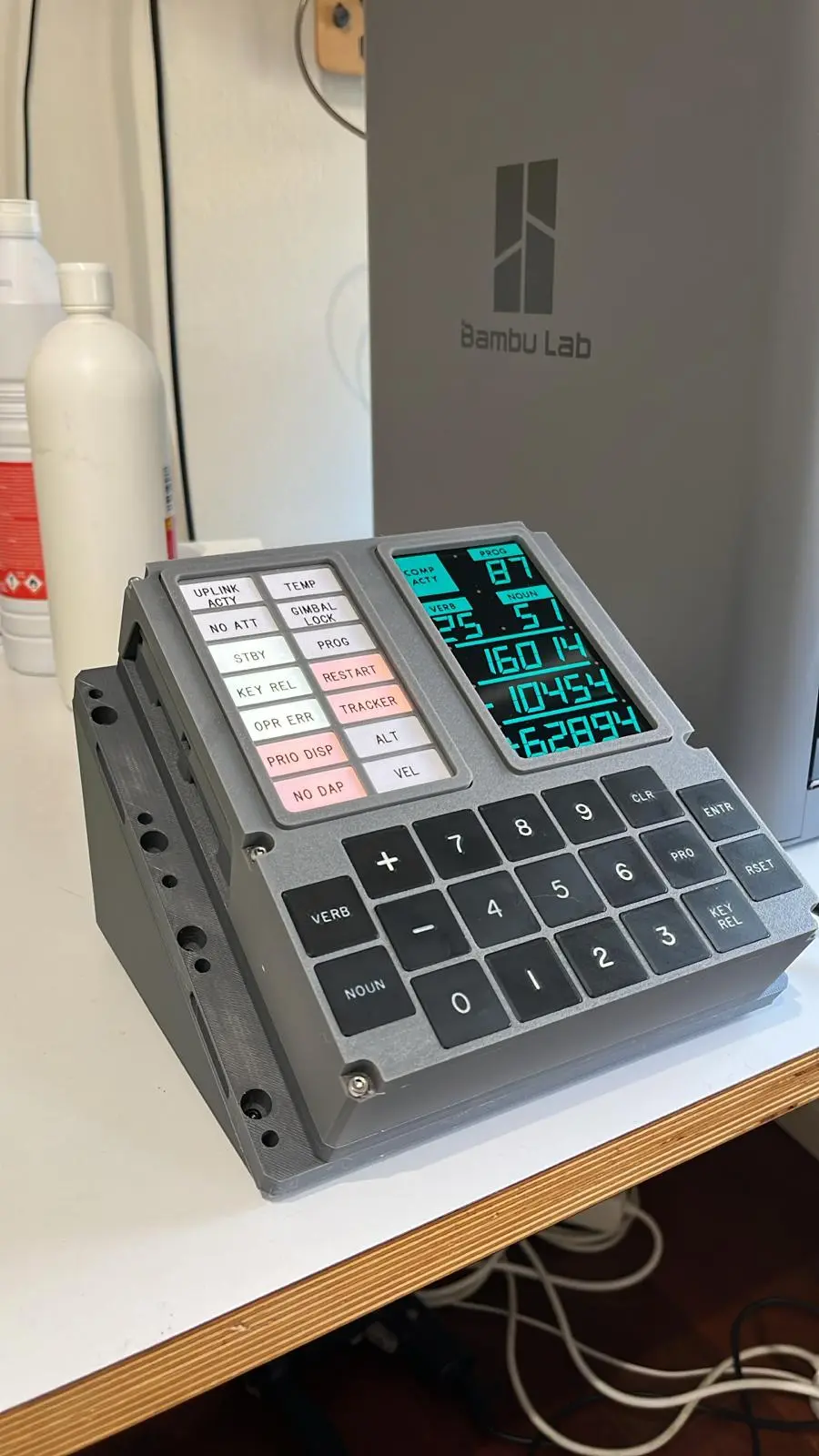
The landing was dramatic — program alarms on the DSKY, Armstrong flying manually past a boulder field, and just 25 seconds of fuel remaining at touchdown. Armstrong and Aldrin spent 2 hours and 31 minutes outside during their single EVA, collecting 21.5 kilograms of samples and deploying scientific instruments.
An estimated 600 million people watched the first moonwalk on live television. The mission returned safely on July 24.
Apollo 12 — Lightning and Precision (November 14-24, 1969)
Pete Conrad, Alan Bean, and Dick Gordon launched into a rainstorm, and the Saturn V was struck by lightning twice during ascent — at 36 seconds and 52 seconds after liftoff. The lightning tripped the fuel cells and disrupted telemetry, but flight controller John Aaron recognized the garbled data pattern and called out the now-legendary instruction: "Try SCE to AUX." Bean found the obscure switch, power was restored, and the mission continued.
Apollo 12 achieved the first precision lunar landing, touching down just 183 meters from the unmanned Surveyor 3 probe, which had landed in the Ocean of Storms in April 1967. Conrad and Bean walked to Surveyor 3 and retrieved parts for return to Earth, providing scientists with invaluable data on how materials weathered in the lunar environment over two and a half years.
The crew performed two EVAs totaling 7 hours and 45 minutes and collected 34.3 kilograms of samples.
Apollo 13 — The Successful Failure (April 11-17, 1970)
An oxygen tank explosion 55 hours into the flight of Jim Lovell, Jack Swigert, and Fred Haise forced the abort of the lunar landing. The crew used the Lunar Module *Aquarius* as a lifeboat, performed critical engine burns to return to Earth, improvised a carbon dioxide scrubber from spare parts, and survived four days of freezing temperatures and dehydration. They splashed down safely on April 17.
Apollo 13 demonstrated the resilience of the Apollo system and the extraordinary capability of Mission Control under crisis conditions. The investigation led to significant spacecraft modifications for subsequent missions.
Apollo 14 — Shepard Returns (January 31 — February 9, 1971)
Alan Shepard — America's first astronaut, grounded for years by an inner ear condition — returned to space as commander alongside Stuart Roosa and Ed Mitchell. Shepard and Mitchell landed in the Fra Mauro highlands, the original target of Apollo 13.
The crew performed two EVAs totaling 9 hours and 23 minutes, collecting 42.3 kilograms of samples. Shepard famously hit two golf balls on the lunar surface with a makeshift club fashioned from an iron head attached to a sample collection tool handle. He described the second shot as going "miles and miles and miles" — in reality, the low-gravity drives traveled roughly 180 and 370 meters respectively.
Apollo 15 — The First J-Mission (July 26 — August 7, 1971)
Apollo 15 marked the beginning of the "J-missions" — extended stays on the lunar surface with enhanced scientific capability. Dave Scott, Jim Irwin, and Al Worden carried the first Lunar Roving Vehicle (LRV), which dramatically expanded the area astronauts could explore.
Scott and Irwin landed at Hadley Rille, a spectacular sinuous channel at the base of the Apennine Mountains — the most geologically complex site visited by Apollo. Over three EVAs totaling 18 hours and 35 minutes, they drove the rover 27.9 kilometers, collected 77 kilograms of samples, and discovered the famous "Genesis Rock" (sample 15415) — a 4.1-billion-year-old piece of the Moon's original anorthosite crust.
Worden performed a deep-space EVA during the return to Earth to retrieve film canisters from the Service Module's Scientific Instrument Module bay — the first EVA conducted in deep space.
Apollo 16 — Highlands Exploration (April 16-27, 1972)
John Young, Charlie Duke, and Ken Mattingly (who had been bumped from Apollo 13) explored the Descartes Highlands, selected because scientists believed the area contained volcanic rocks. The samples turned out to be impact breccias rather than volcanic material — an important finding that reshaped understanding of lunar geology.
The mission nearly faced an abort when the Command Module's backup guidance system malfunctioned during the descent orbit. Young and Duke waited in the LM for six hours while engineers in Houston analyzed the problem and determined it was safe to proceed.
Young and Duke performed three EVAs totaling 20 hours and 14 minutes, drove the rover 26.7 kilometers, and collected 95.7 kilograms of samples — the second-largest haul of the program.
Apollo 17 — The Final Mission (December 7-19, 1972)
The last Apollo lunar mission was also in many ways the most ambitious. Commander Gene Cernan, Lunar Module Pilot Harrison "Jack" Schmitt — the only professional geologist to visit the Moon — and Command Module Pilot Ron Evans launched on the only nighttime Saturn V launch, a spectacular event that lit up the Florida sky.
Cernan and Schmitt landed in the Taurus-Littrow valley, a site chosen for its geological diversity. Over three EVAs totaling a record 22 hours and 4 minutes, they drove the rover 35.7 kilometers and collected 110.5 kilograms of samples — the largest collection of any Apollo mission. Schmitt discovered orange soil (tiny glass beads formed by ancient volcanic activity), one of the most scientifically significant finds of the entire program.
As Cernan climbed the ladder to the LM for the final time, he paused and spoke: "As I take man's last step from the surface, back home for some time to come — but we believe not too long into the future — I'd like to just say what I believe history will record: that America's challenge of today has forged man's destiny of tomorrow."
No human has returned to the lunar surface since.
The Cancelled Missions: Apollo 18, 19, and 20
NASA originally planned missions through Apollo 20. Budget cuts and shifting political priorities led to cancellations:
- Apollo 20 was cancelled in January 1970, and its Saturn V (AS-514) was reassigned to launch Skylab
- Apollo 18 and 19 were cancelled in September 1970
The cancellations eliminated planned landings at Copernicus Crater, Hadley Rille (a different traverse than Apollo 15), and Schroter's Valley. The unused Saturn V rockets and spacecraft became museum exhibits.
Program Legacy
The Apollo program's achievements are quantifiable:
- 6 successful lunar landings (Apollo 11, 12, 14, 15, 16, 17)
- 12 astronauts walked on the Moon
- 382 kilograms of lunar samples returned
- Total mission time on the lunar surface: approximately 160 hours
- Total EVA time: approximately 80 hours
- Distance driven on the Moon: approximately 90 kilometers (J-missions with rover)
- Scientific instruments deployed: seismometers, magnetometers, solar wind collectors, laser retroreflectors (some still in use today)
- Program cost: approximately 25.8 billion dollars (1960s currency), roughly 260 billion in today's dollars
But the legacy transcends numbers. Apollo developed technologies that became foundational to modern computing, materials science, and telecommunications. The Apollo Guidance Computer, accessible through the DSKY interface, pioneered concepts in real-time embedded computing that influence systems engineering to this day. The program's management techniques — particularly its approach to systems integration, configuration management, and failure analysis — became templates for complex engineering projects worldwide.
What We Learned
The lunar samples alone justified the program's scientific investment. They revealed that:
- The Moon likely formed from debris after a Mars-sized body collided with the early Earth (the Giant Impact Hypothesis)
- The lunar surface is covered in a layer of fine, fragmented rock called regolith, created by billions of years of meteorite impacts
- The Moon has no global magnetic field, though it once did
- Ancient volcanic activity created the dark maria (seas) visible from Earth
- The Moon is geologically dead — no active volcanism or tectonic movement
The seismic instruments deployed by Apollo crews detected moonquakes for years after the astronauts left, providing data about the Moon's internal structure.
The Human Cost and the Human Triumph
Three astronauts — Grissom, White, and Chaffee — gave their lives in the Apollo 1 fire. Numerous ground workers were killed or injured during the program's vast construction and testing operations. The human cost was real and should never be forgotten.
But so should the triumph. At its peak, the Apollo program employed more than 400,000 people — engineers, machinists, welders, seamstresses who sewed spacesuits, programmers who wrote code for the AGC, and the flight controllers who guided each mission from the consoles of Mission Control. It was arguably the largest peaceful engineering project in human history.
The Apollo program proved that when humanity focuses its resources and determination on a goal, the seemingly impossible becomes achievable. The twelve sets of bootprints on the lunar surface — undisturbed in the airless vacuum for over five decades — stand as permanent testimony to that truth.